Assiko
The music of guitar and bottle, from Bassa country
Period : 1950s-1960s · The Bassa above all, but also the Beti (Eton, Bulu), who play their own variants
What is it?
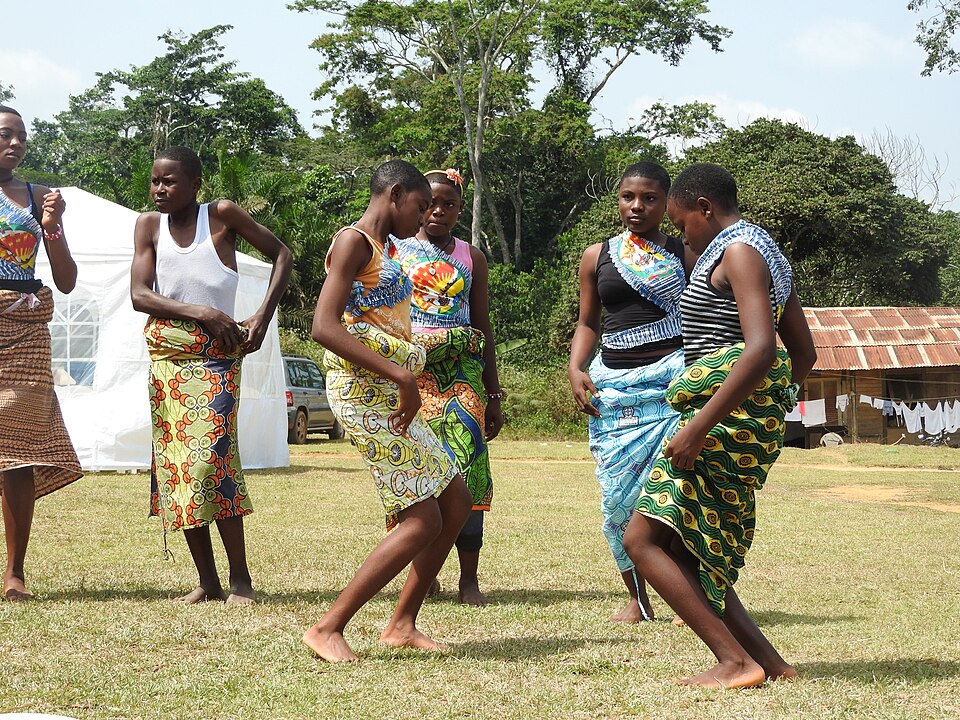
Assiko is both a dance and a music, practised above all by the Bassa of the Centre and Littoral regions. A singer accompanies himself on guitar while a percussionist strikes an empty bottle with a knife or fork. It was very popular around the time of independence.
History and origin of the name
Assiko began as a traditional healing dance that over time became a festive one. It is likened to palm-wine music, the guitar music of the West African coast. The guitarist Jean Bikoko, known as Aladin, did most to popularise it.
Rhythm, instruments and dance
- A fast, syncopated and jerky rhythm in its Bassa form; other variants, such as Bulu assiko, are gentler.
- The guitar leads, switching between accompaniment and solos between verses; the empty bottle serves as percussion, so much so that the violinist Jean-Luc Ponty nicknamed it "bottle-bop". Double bass, drums and brass sometimes complete the line-up.
- Dancers, wearing a wrapper and often barefoot, move in small steps with rolling hips, crouch and perform acrobatics, sometimes with a bottle balanced on their heads.
Key artists
- Jean Bikoko "Aladin" — a guitarist and singer born in 1939 in Éséka, nicknamed the "pope of assiko", who did most to popularise the genre.
- Dikoume Bernard — named alongside Jean Bikoko among the figures of assiko just after independence.
- Olivier de Clovis Bonga — one of the leading assiko artists of later generations.
- Samson Chaud Gars — another assiko artist regularly listed among the genre's main names.
Today
Assiko fed into Douala's makossa, whose guitar playing owes it a great deal: some even describe makossa as a slowed-down assiko. Each region plays its own form, from the fast, "muscular" Bassa and Eton assiko to the bottle dance of the North-West. Along with makossa, bikutsi and mangambeu, it counts among Cameroon's four main rhythms.
What sources disagree on
English Wikipedia derives the name from "isi" (earth) and "koo" (foot), an etymology not confirmed by the other sources consulted. Jean Bikoko's date of death varies between sources (2005 or 2010).