Bend skin
The urban rhythm of the crisis years, from Bamileke country
Period : 1990s · The Bamileke, notably the Medumba-speaking Bangangté
Also spelt : Bend-skin, Ben skin, Bendskin
What is it?
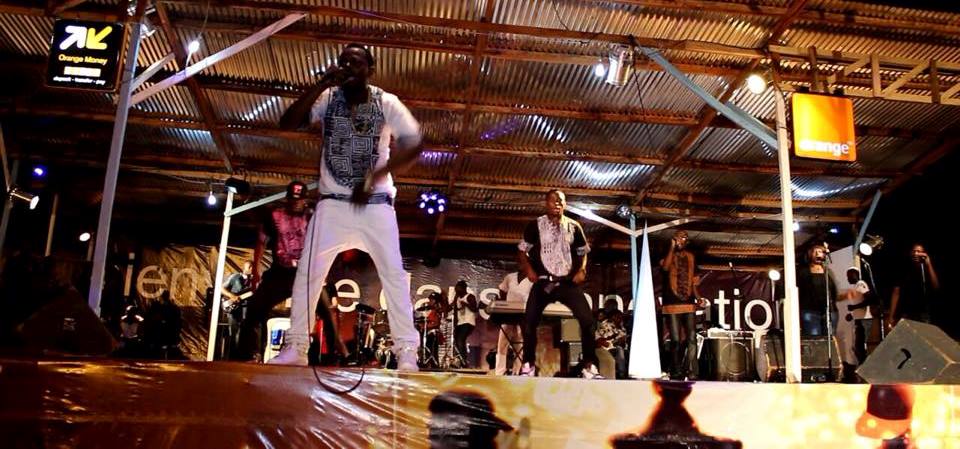
Bend skin is an urban popular music from Cameroon, related to mangambeu and closely tied to Bamileke country in the West. It is played with a pared-down backing of drums and maracas behind a vocalist who both sings and raps. Lyrics are often in Medumba, the language of Bangangté, or in other Bamileke languages.
History and origin of the name
The genre took off in 1993 in the New Bell district of Douala, in the midst of an economic crisis. It is described as an offshoot of mangambeu, and the singer André-Marie Tala made it known in the 1990s by developing it from his own style, tchamassi. In Cameroon the same name is given to motorbike taxis.
Rhythm, instruments and dance
- A lively dance rhythm, originally played to liven up celebrations in Bamileke country.
- Stripped-down instrumentation: drums and maracas, often made from soda cans.
- A dance performed bent forward with quick stamping steps, and vocals that alternate between singing and rapping.
Key artists
- Kouchouam Mbada — the band most closely associated with the genre, which it helped popularise in the 1990s.
- André-Marie Tala — a singer and guitarist born in 1950 in Bandjoun, who released a cassette called "Bend Skin" (1993) and the compilation "Bend Skin Beats" (2009).
- Marole Tchamba — one of the artists who revived the genre in the twenty-first century.
- Michael Kiessou — another leading figure of the bend skin revival in the twenty-first century.
- Keng Godefroy — named among the artists who restored the genre's popularity.
Today
After its rise in the 1990s, bend skin found fresh success in the twenty-first century with a new generation of artists. It has spread to most of the country's cities while remaining closely associated with the West and the Bamileke.
What sources disagree on
Sources differ on who created the genre: some link it to mangambeu and the band Kouchouam Mbada, others see it as an evolution of André-Marie Tala's tchamassi, and others still use "mangambeu" and "bend skin" as synonyms. The origin of the name, linked to the dancers' bent backs, is only a hypothesis, and the sources do not say whether the music gave its name to the motorbike taxis or the other way round.