Douala
Cameroon's economic capital, on the banks of the Wouri
Littoral Region (capital: Douala) · Wouri department (capital: Douala)
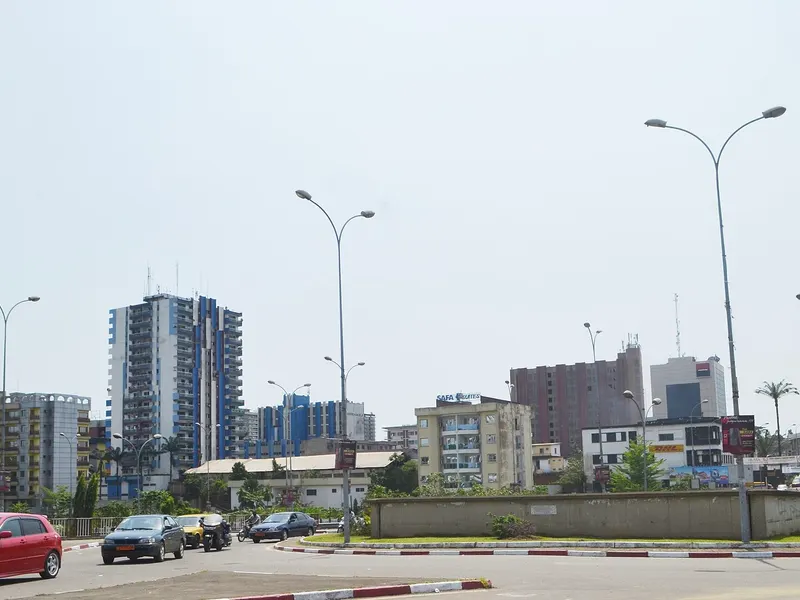
Douala is Cameroon's largest city and its economic capital. It sits on the Wouri estuary in the Littoral region and, by most estimates, has more than three million inhabitants. It is the country's maritime gateway and one of its main trading hubs.
History and origin of the name
The city takes its name from the Duala people, long settled on the banks of the Wouri. Under the German protectorate it was called Kamerunstadt and served as the colony's capital before the seat of government moved to Buea in the early twentieth century. It kept its role as a major port under French administration, and after independence.
What to see
- The historic and central districts: Akwa, Bonanjo, Bonapriso, Deïdo, Bonabéri and New Bell, each with a very different feel.
- The Wouri river and its estuary, around which the city grew.
- The Ngondo, the great traditional festival of the Sawa peoples, held in Douala around the immersion of a sacred vessel in the Wouri. UNESCO added it to the Representative List of the Intangible Cultural Heritage of Humanity in December 2024.
Economy and local life
Douala's port handles most of the country's exports: oil, cocoa, coffee and timber. The deep-water port at Kribi, further south, is taking over part of that traffic. The city is also a creative centre, particularly for music: makossa is associated with Douala, and several people featured on this site were born or lived here.
What to eat
Douala is the metropolis of the Littoral region, home of ndolé, mbongo tchobi and koki. You find them all over town, from restaurants to family tables, alongside evening street food such as soya.
Practical information
The climate is tropical, hot and humid all year round at around 26 °C, with very heavy rain mainly from June to October. Douala has an international airport.