Maroua
The capital of the Far North, a city of craftsmen at the foot of the Mandara Mountains
Far North Region (capital: Maroua) · Diamaré department (capital: Maroua)
Related language : Fulfulde
Where is Maroua?
Maroua is in the Far North Region of Cameroon, about 210 km from Garoua by road.
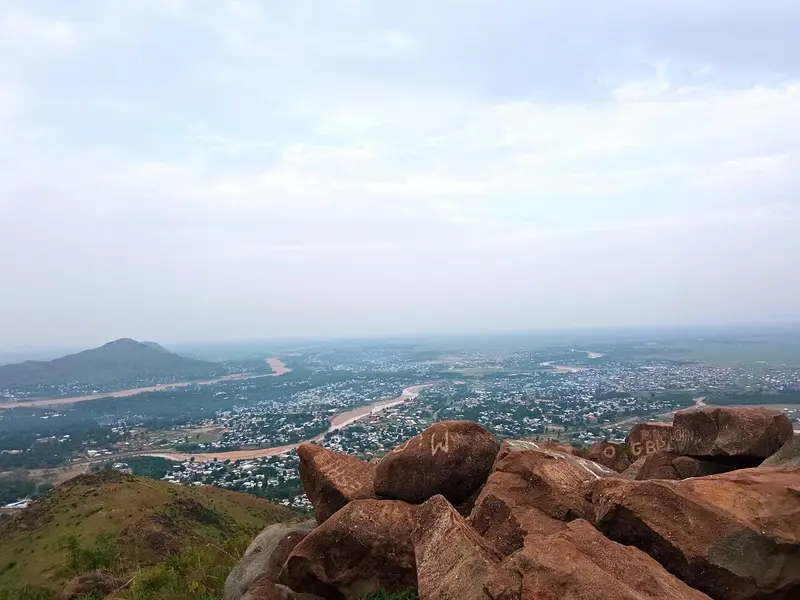
Maroua is the capital of the Far North region and of the Diamaré department, more than 1,300 kilometres north of Yaoundé by road. It lies where the Kaliao and Tsanaga, two seasonal rivers (mayos), meet, in the foothills of the Mandara Mountains. The 2005 census counted about 200,000 inhabitants; the city has grown a great deal since, but current estimates vary widely.
History and origin of the name
The site was occupied by the Guiziga in the seventeenth century, then by the Mofu in the eighteenth; the Fulani settled later and founded a lamidate that still exists. The name is said to come from the Marwa community, gallicised as Maroua when the French administration arrived. In 1975 the Maroua Declaration, an agreement on the maritime border between Nigeria and Cameroon, was signed here.
What to see
- The central market, where tanners, potters, tailors, weavers and blacksmiths gather, and the craft centre at its entrance: embroidered or woven tablecloths, leather rugs, slippers.
- The Maroua lamidate, the traditional Fulani chiefdom.
- The Mandara Mountains to the west, home to many groups such as the Mafa and the Kapsiki; the village of Rhumsiki, in Kapsiki country, is famous for its landscape of volcanic peaks.
- Waza National Park, further north, a UNESCO biosphere reserve: savannah home to lions, buffalo and leopards, it was Cameroon's most visited park until 2014.
Economy and local life
Maroua is a centre of trade and crafts: embroidery, leatherwork, jewellery and pottery keep many workshops busy. Leatherwork, long reserved for certain groups, opened up during the twentieth century to craftsmen of diverse origins, including women; a craft centre was set up as early as 1955 to sell its goods. The city has also been a university town since the University of Maroua was founded. Fulfulde is the most widely spoken language. In 2015 Boko Haram attacks hit the city and crippled its economy; by 2018 the press was reporting a return to calm.
What to eat
Maroua lies at the heart of the Diamaré, where Fulani cooking is best documented: millet or sorghum couscous balls, baobab-leaf sauce, tasba sauce and millet porridge. Bili-bili, sorghum beer, is brewed in the Maroua area.
Practical information
The climate is semi-arid, with a long dry season from October to May and a short rainy season from June to September. The city is served by Maroua Salak Airport and linked by National Highway 1 to Garoua in the south and Kousseri in the north. The security situation in the Far North should be checked before any trip.
Distances by road
Approximate distances, city centre to city centre. Travel time depends heavily on road conditions and traffic.