Ngaoundéré
The capital of Adamawa, end of the railway and gateway to the North
Adamawa Region (capital: Ngaoundéré) · Vina department (capital: Ngaoundéré)
Related language : Fulfulde
Where is Ngaoundéré?
Ngaoundéré is in the Adamawa Region of Cameroon, 250 to 290 km from Garoua by road.
Ngaoundéré is the capital of the Adamawa region and of the Vina department, on the Adamawa plateau. It is an unavoidable crossroads between the south and north of the country: the railway from Douala and Yaoundé has its terminus here. The 2005 census counted about 150,000 inhabitants; the city has grown a great deal since.
History and origin of the name
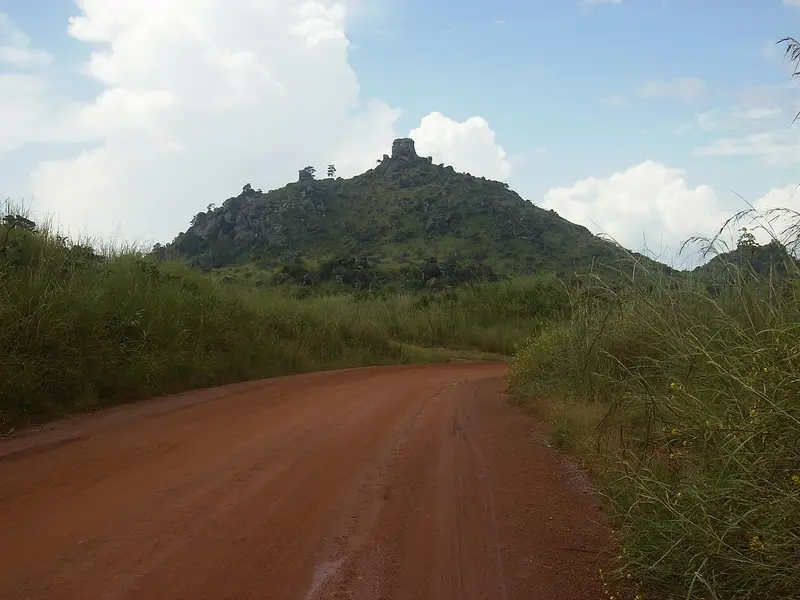
The site was a Mbum village called Ndelbe. In the 1830s the Fulani, led by Ardo Ndjobdi, took it and founded the lamidate. The name means "navel mountain" in the Mbum language, after the hill that overlooks the town, topped by a rounded rock. By tradition the Lamido descends from the ruling Fulani family on his father's side and from the Mbum on his mother's, so as to represent the whole population. The Germans occupied the town in 1901; after the First World War it came under French administration. The arrival of the railway in the early 1970s greatly increased its population.
What to see
- The Lamido's palace, where Fulani and Mbum influences meet: a round hut with painted pillars welcomes visitors, and a museum tells the story of the dynasty. The Lamido's great mosque is the city's other major landmark.
- Mount Ngaoundéré and its rock, which gave the city its name.
- The Vina Falls, about fifteen kilometres away on the Meiganga road, fed all year round and most spectacular in the rainy season.
- Lake Tison, close to the city, and the Mardock woods.
Economy and local life
The city lives off its position as a crossroads: Adamawa cattle and northern cotton head south, while the railway is used mainly for freight, notably to supply Chad from the port of Douala. Livestock farming, long dominated by the Gudali zebu, also supports a dairy industry. The University of Ngaoundéré, founded in 1993, draws students from all over the country and from neighbouring countries, particularly Chad and the Central African Republic.
What to eat
Ngaoundéré is the home of kilichi, dried and spiced beef, which has become one of its signature products and is a candidate for a geographical indication. As herding country, Adamawa is also the land of kossam, Fulani curdled milk, and of millet or sorghum couscous balls.
Practical information
Set at altitude in wooded savannah, the city has a fairly temperate climate, with a dry season marked by the harmattan, a dry wind from the north, and a rainy season. A passenger train links it to Yaoundé, and a paved road runs north to Garoua and Maroua, and to Chad. The airport now sees little or no commercial traffic.
Distances by road
- Garoua: 250 to 290 km
Approximate distances, city centre to city centre. Travel time depends heavily on road conditions and traffic.