Yaoundé
The political capital, the city of seven hills
Centre Region (capital: Yaoundé) · Mfoundi department (capital: Yaoundé)
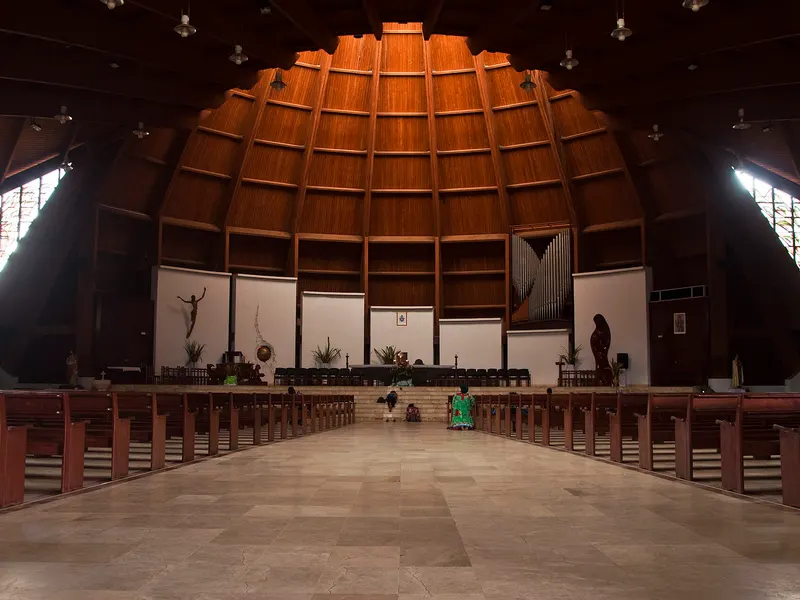
Yaoundé is Cameroon's political capital, in the Centre region. Built at roughly 750 metres above sea level on a landscape of hills that earned it the nickname "city of seven hills", it is the country's second-largest city, with more than three million inhabitants by most estimates.
History and origin of the name
The site was occupied by German explorers in the late 1880s, then by the botanist Georg August Zenker from the end of 1889. The name comes from the Ewondo, the people of the area: the Germans transcribed it as "Jaunde". After the First World War the city became the capital of French-administered Cameroon, then of the independent country in 1960.
What to see
- The National Museum of Cameroon, housed in the former presidential palace.
- The Basilica of Mary Queen of the Apostles at Mvolyé and Our Lady of Victories Cathedral.
- Mount Febe, one of the viewpoints over the city, and the Mvog-Betsi zoo and botanical park.
- The Reunification Monument and the Palais des Congrès.
Economy and local life
Home to the institutions, ministries and embassies, Yaoundé is also a university city, with the universities of Yaoundé I and II as well as private Catholic and Protestant universities. A railway line, the Transcamerounais, links it to Ngaoundéré in the north of the country.
What to eat
Yaoundé lies in the Centre and South, home of okok, sanga and mets de pistache. These dishes are staples of family cooking here.
Practical information
The climate is tropical, with average temperatures of 23 to 26 °C and around 1,500 mm of rain a year. Nsimalen International Airport serves the city.